Central Kentucky Riding for Hope- An Aftercare Ally
Recently, we reached out to Central Kentucky Riding for Hope to learn more about their program and involvement with off-track Thoroughbreds. Continue reading to learn more about this terrific organization.
Where is Central Kentucky Riding for Hope based?
CKRH is based in Lexington, KY, on 40 acres within the Kentucky Horse Park.
How did your program begin?
Central Kentucky Riding for Hope was founded in 1981 through a collaboration between Dr. Peter Bosomworth, then Chancellor of the University of Kentucky Medical Center, and a group of local horse enthusiasts. The pilot program, which used borrowed horses to serve just four participants, aimed to provide an alternative to machine-based and table-top therapies by harnessing the three-dimensional movement of the horse—closely mirroring the human stride. The success of this effort led to a permanent home in a converted tobacco barn at the newly established Kentucky Horse Park. Operating seasonally at first, CKRH earned accreditation through the Professional Association for Therapeutic Horsemanship International (PATH Intl.) in 1987 and gained recognition as a Premier Accredited Center by 1998.
As interest in our therapeutic activities grew, it quickly became clear that a seasonal program could no longer meet the needs of our community. In 2005, the CKRH Board of Directors launched a $4 million capital campaign to expand services year-round. By 2011, our state-of-the-art indoor facility was complete, eliminating barriers of weather and daylight. This new space not only ensured consistent access to therapeutic riding but also opened the door to expanded programming, including equine-facilitated mental health and equine-facilitated learning.
What makes CKRH unique?
CKRH is the only PATH Intl. Premier Certified Center in Central Kentucky. This means that not only do we hold ourselves to the highest standard of animal care, but we are also held to elite standards for our programming. We have learned that thoroughbreds in our program can be utilized for so many participants, from riders with TBI or paralysis to our veterans programming for those struggling with PTSD. We give our horses a job in an environment where they can thrive.
What happens when a horse is accepted into your program?
When a new horse is brought into our program, they come for a 90-day trial period. During this trial period, they are ridden by staff members and put through their paces to see if they fit a therapy environment. We observe their demeanor and work ethic during these rides as well as mock lessons, where we expose them to different tools that we utilize during therapeutic riding sessions. After passing the 90-day trial period, we introduce them into participant lessons, and they become full-time equine therapists for our participants.
What does a typical day/week look like for a horse at CKRH?
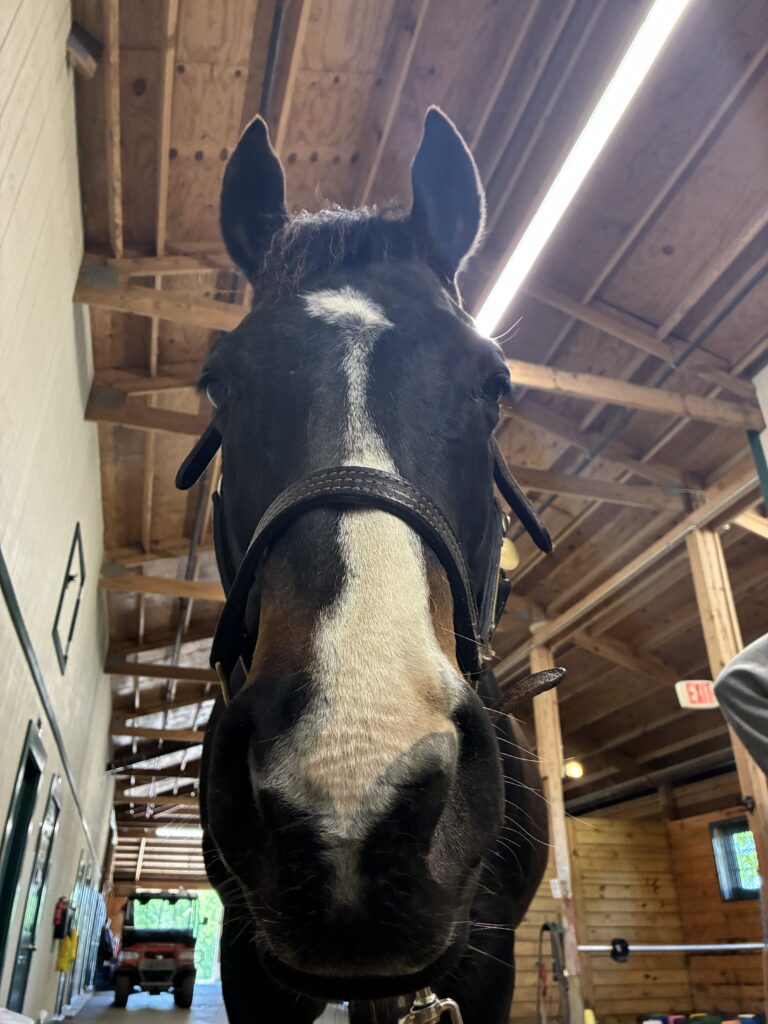
When we are in session our horses generally participate in 1 to 3 lessons per week, depending on the participants we have. Each of our sessions runs for 8 weeks with 2-week breaks in between and then the months of December and January are off. When the horses have a lesson, they are theraplated, groomed, and participate in a 30-45 minute lesson. These lessons can be mounted or non-mounted and involve stimulating activities for both the participant and the horses. Every lesson is different to help meet the needs of the participant and allow them to progress. We check every horse twice a day as a health check and fed breakfast and dinner. For the most part they live out in fields with run-in sheds except for times of inclement weather.
How many Thoroughbreds have gone through your program?
In the last 15 years, we have had nearly 30 Thoroughbreds who have had a second career with us. Our records are not as concrete beyond that, but Thoroughbreds have always been a part of our programming. Currently, we always have at least 6 thoroughbreds in our herd and are always looking to add more.
How does CKRH receive funding?
CKRH engages in year-round fundraising strategies to support our mission. One of the primary methods is through organizing special events that not only raise funds but also foster community engagement and support. CKRH also relies on grant funding from private foundations, organizations, and sponsors to sustain our programs and services. Additionally, we operate an individual giving program that reaches out to donors through direct mail, email campaigns, and online fundraising platforms. CKRH also offers sponsorship opportunities for businesses and organizations. Through these efforts, we ensure the stability necessary to empower participants, increase program accessibility, ensure program sustainability, and maintain high-quality programming:
1. Special Events: CKRH hosts 4-5 annual fundraisers: the Paul Frazer Memorial Combined Test and Dressage Show, the NIGHT OF THE STARS Gala, a Used Tack Sale, a benefit Polo Match and a 3K.
2. Grants, Donations, & Sponsorships: CKRH works hard to cultivate relationships with individual donors, foundations, and sponsors. Solicited efforts include grant applications, direct mail appeals (Annual Fund), and In-Kind vendor requests for donated products or services. Unsolicited donations include memorial gifts, proceeds from community fundraisers on CKRH’s behalf, or any contribution received without a direct request from CKRH.
3. Program Revenue: Includes participant fees (CKRH charges a $40.00 service fee per TR lesson), workshop income, and site rentals.
4. Other Revenue: Proceeds from the Colostrum Banks at Hagyard Equine Medical Institute Rood & Riddle Equine Hospital, community income (ex: Kroger cards), and investment income.
5. Endowment building: CKRH encourages donors to include us in their estate plans and has an endowment for facility care.
Do you have a story about a Thoroughbred that we can share with our readers?
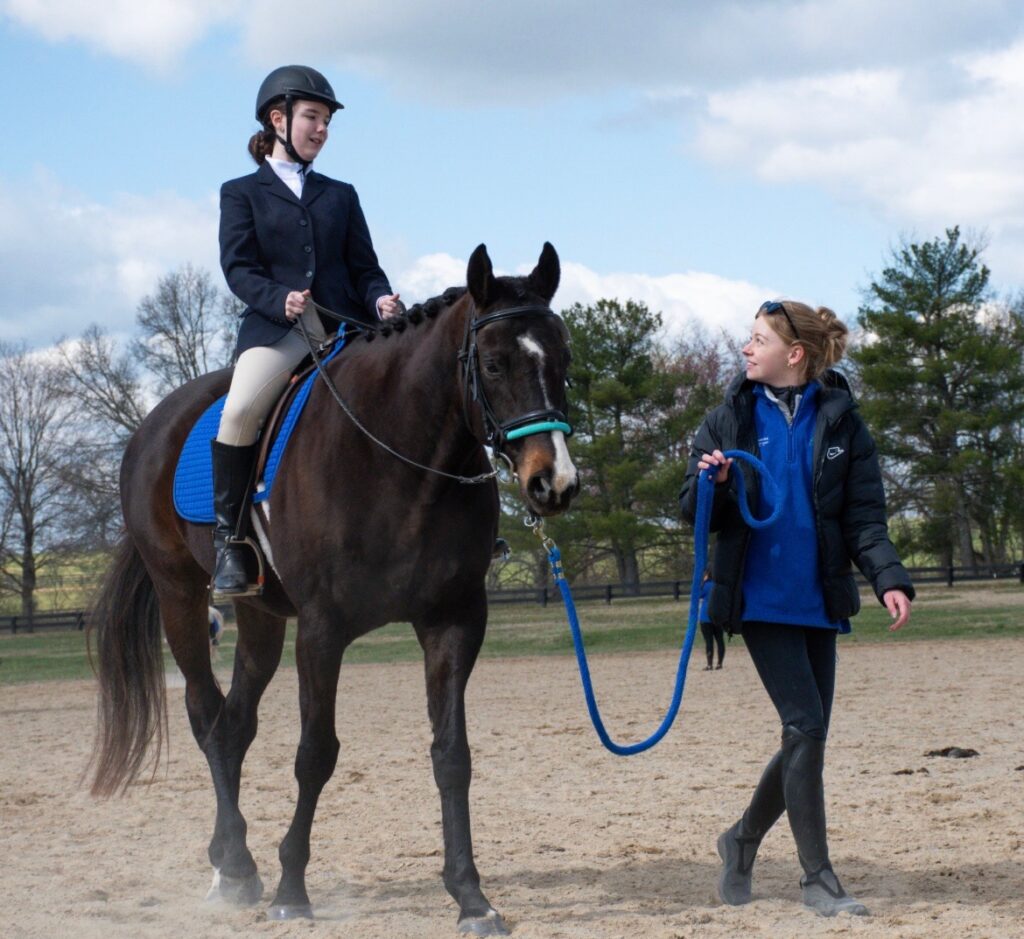
While we love all our Thoroughbreds, one in particular is currently excelling in his roles within the program, Appealing Alex. Alex is a care lease donation, so he will stay with us until his full retirement, when he will return to his owner. At the moment, his main participant is an adult who was injured in a riding accident. She has been able to gain back confidence on Alex to ride without a horse leader, completely independent. During their lessons, they work on stretching her body and Alex’s mind through cavaletti exercises and steering patterns. Alex stands perfectly while she mounts and dismounts with the help of our automated lift and knows his job will differ each lesson depending on her body’s needs.
Additionally, Alex’s calm demeanor makes him the perfect candidate to showcase participants during our annual Night of the Stars gala or when we take participants off-site for adaptive horse shows. Each year he helps highlight a different participant whose challenges vary from mental challenges to physical.
If people want to help your program, what can they do?
Obviously, donations, whether monetary or items that we can use to help care for our animals, are always appreciated. If someone is in the area, we love volunteers to help support our lessons or if someone has a horse that is over 6 years old who they think could be a good therapy horse, we are always looking for the right candidates.
To read another Aftercare Ally, please click here.